Myasthenia Gravis

Myasthenia Gravis (MG)
Symptoms, Treatments, and Diagnosis

myasthenia gravis  To understand myasthenia gravis (MG), the physiology behind muscle movement has to be understood.  When the brain wants to move a muscle it sends an electrical signal through the nerves.  Once that signal reaches the end of the nerve, a chemical known as acetylcholine is released which attaches itself to binding sites on the muscle membrane called receptors.  When this happens a series of chemical reactions are set into motion that causes the muscle to contract.  In myasthenia gravis the body’s immune system attacks the binding sites for the acetylcholine which causes a communication problem between the nerve and the muscle. 


Symptoms:

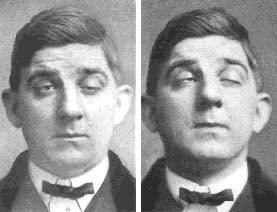
The characteristic symptom of myasthenia gravis is fatigability, which means that a muscle that is used repeatedly starts to become weak.  The symptoms usually start in the face and spread to the other parts of the body as the disease progresses.  Patients initially complain of drooping eye lids that gets worst as the day goes on; they develop double vision, difficulty talking, and difficulty chewing.  All of these symptoms are worst with repeated use and improve with rest.  As the disease progresses the shoulders and the thighs become week and the weakness could eventually spread to the muscles that are used to breath; the patient could develop shortness of breath and stop breathing if not treated properly. 

Diagnosis:

            There are several tests that we use to make the diagnosis.  Blood tests are sent to look for different antibodies in the body that are responsible for attacking the muscle nerve junction. We also do a nerve test called repetitive nerve stimulation, in which the muscle is repeatedly stimulated to see if the muscle fatigues.  Single muscle fiber could be performed in which recordings are used to measure muscle activity.   Another method that is used is called the Tensilon test, where a short acting medication that is used to treat Myasthenia Gravis is injected into the patient’s vein, and the patient is watched for signs of improvement. 

Treatments:


Although there is no cure for MG, there is very effective treatment.  In our office most patients could asymptomatic with proper treatment.  There are two general classes of medications.  One class is aimed at increasing the amount of acetylcholine in the body and the other is aimed at suppressing the immune system. 
The first class of medications is the anticholinesterase agents.  They function by inhibiting the brake down of acetylcholine. Mestinon is one of the most widely used anticholinesterase agents for the treatment of myasthenia. Mestinon allows acetylcholine to remain at the neuromuscular junction longer than usual so that more receptor sites can be activated resulting in a stronger muscle contraction and less weakness.  With Mestinon most patients have rapid signs of improvement.  However, it is not a good option for chronic treatment in most patients because of the multiple problems that it could cause.  High doses of Mestinon could be very dangerous causing sever weakness, and it could have many side effects including nausea, vomiting, diarrhea, increased secretions, decreased heart rate, and others
A very important point to understand is that Mestinon does not treat the underlying disease.  As already mentioned myasthenia gravis is a disease where the body attacks the muscle receptors, and as long as the immune system is not inhibited, the disease progresses causing the patient to become progressively weaker.  Patients notice that initially they require a small amount of Mestinon but with progression of disease, higher doses is required.  Eventually Mestinon becomes ineffective or when the dose is raised high enough, Mestinon itself causes weakness, and the patient could develop Myasthenic crisis.  It should be noted that there are cases where the severity of the disease is minimal, usually effecting the eyes only, and the disease does not progress; in these cases the patients could stay on Mestinon. 
Another accepted treatment for myasthenic patients is Thymectomy, removal of the thymus gland. It is believed that removal of the thymus gland in younger patients could increase the probability of remission or cause improvement. Maximum benefit is generally seen within two to five years.
We are currently using multiple medications to suppress the immune system which include corticosteroids, like Prednisone, Azathioprine (Imuran), Cyclophosphamide (Cytoxan), Mycophenolate Mofetil (CellCept), Plasmapheresis, and Intravenous Immunoglobulin (IVIG).  Each of these treatments has their benefits and side effects.  In our clinic, we take into consideration each patient individually designing the best treatment plan for each patient.  In most cases we are able to make the patients asymptomatic without major side effects.


Neurology Muscular Dystrophy and Neuropathy Institute

9301 Wilshire Blvd. Suite 600, Beverly Hills (Los Angeles County), CA 90210

(310) 278-2525


Neuropathy - C, D, S,T,N| CIDP - S, D, T | Polymyositis and Dermatomyositis | Carpal Tunnel Syndrome - C,D,T| Hand Tingling-C,D,T|

Myasthenia Gravis | Headaches | Migraines-D,T| Multiple Sclerosis- S,T,T | Tremors | Parkinson's Disease |

Essential Tremors | Loss of Balance | Home | Back Pain - D, T |